The Average Beaver
With the exception of humans, the North American beaver (Castor Canadensis) have the largest impact on the natural landscape of any North American mammal (Elsey, Platt, & Shirley, 2015). Beavers play a vital role in the ecosystems in which they live by damming streams and creating wetland habitats in which many other species thrive, yet little is known about the population of beavers that occupy the area in and around schoolhouse pond or the environmental impact they have on the region.
Beavers provide a number of ecosystem services, which include purifying and removing pollutants from the water, preventing floods, providing habitats for other species, and preventing soil erosion. Since beaver presence tends to increase sedimentation (preventing erosion) and improve water quality, it is important to understand the exact effects the beavers have on their habitat.

On average, approximately 6 beavers can live in a single lodge or den and are considered a colony. Each colony usually contains a pair of monogamous mating partners, along with their offspring until they become sexually mature, so identifying active lodges and dens along with documenting and compiling beaver sightings in these territories can provide a great deal of information on the current population size (Jenkins & Busher, 1979).

Beaver lodges are partially underwater and airtight structures made of mud and wood. Some colonies build multiple lodges that may or may not be used over a period. In areas that are especially prone to flooding, beavers also utilize riverbank dens and burrows.

Beaver colonies are thought to have a territorial range of at least 1 km, and foraging distance is dependent on factors such as geographic location and food availability (Baker & Hill, 2003). Thus, unique factors in the area around schoolhouse pond such as tree density, primary type of vegetation, and interspecific competition will impact territorial range and foraging distance. At this time, no research has been done to establish the effects of population density on this territorial range.

Dams are built in order to raise the water level of the beavers’ habitat and can significantly slow the speed of a river and have the potential to divert the flow of water, especially with multiple dams in one area. Beaver dams also increase the rate that sediment builds up in beaver ponds, which prevents erosion and can act as storage for carbon and organic matter (Naiman, Johnston, & Kelley, 1988). Beavers can alter the quality of the water in which they live, depending on their location and climate. Studies show that the increased sediment levels are able to store large amounts of nitrogen and phosphorus, and therefore can remove harmful amounts from the water (Rosell, Bozser, Collen, & Parker, 2005).
Beaver dams or lodges that are no longer occupied by beavers are often home to other semi aquatic mammals, like mink or river otters. In some areas river otters have been known to live in active beaver lodges with beavers.

Schoolhouse Pond Ecology
Schoolhouse pond and the surrounding region is home to many different species of mammals, birds and reptiles. Some of these species benifit from the beavers, others prey on beavers, and some are hardly impacted by the beavers.
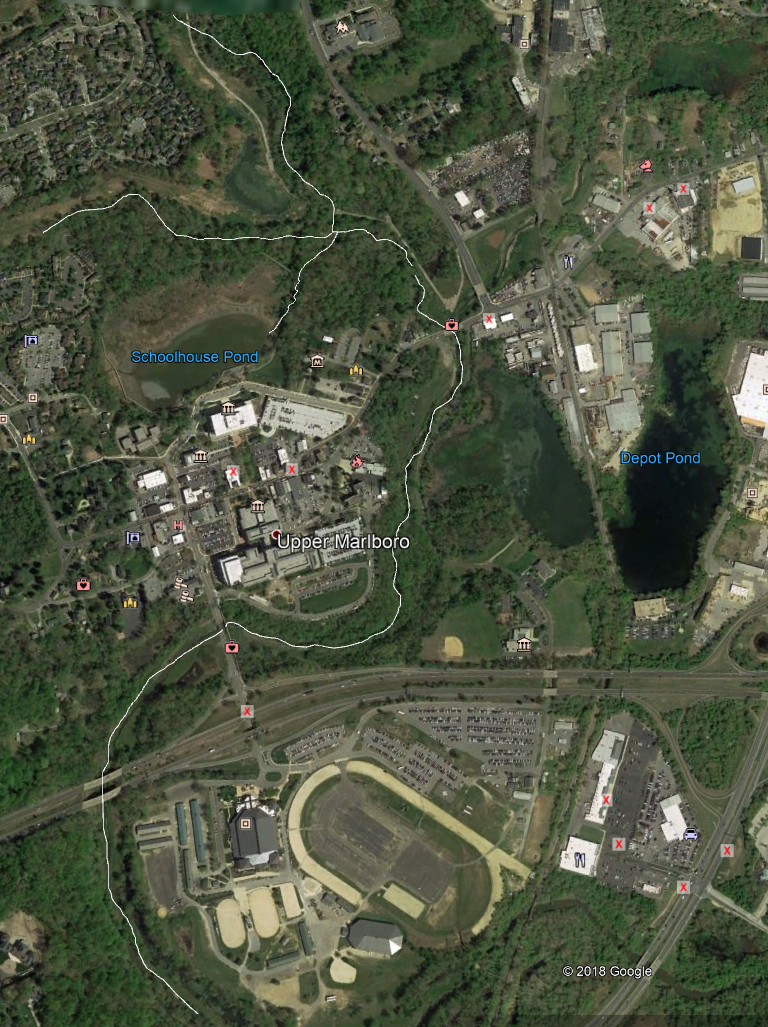

 Schoolhouse Pond Beaver Project