Finding Lodges
Identifying lodges can be a rather difficult. Lodges can be fairly substantial structures, but in a river that has dramatic floods regularly it can be difficult to determine whether a lodge is indeed a lodge and not just a log jam. There are some features that help distinguish a lodge from a log jam. The most telling of these features are:
- Lots of beaver tracks on banks around the suspected lodge (particularly up river)
- Lodge is made of many small healthy looking trees and branches (Some of which possibly have chew marks)
- Water is diverted around the suspected lodge rather than flowing through it
- Water around the lodge is deep enough that a large beaver would be able to fully submerse itself
- Many downed trees just north of the suspected lodge
Photography of Beavers
Once there is a reasonable suspicion of a log jam being an active beaver lodge based on the characteristics listed above the next step is to place trail cameras to get photo evidence of the beavers. I typically will place the cameras just north of the suspected lodge on a bank with many beaver tracks. I typically leave the cameras for at least a week, then review the videos. Attempting to distinguish the individual beavers is somewhat of an art. If the camera was positioned correctly identifying the beavers gender is relatively easily. Using the FOV of the camera and the look angle to determine the beavers size is also possible but can be a real challenge for beavers that are similar sizes. For example, it is possible Liam (see “Meet the Beavers”) has a brother around the same age, that may have been photographed. Due to the margins of error when estimating the size, I am unable to say with any confidence that the videos were not of the same beaver.
Once the beavers of a specific lodge have been photographed on the trail cameras, the next step is a stakeout. There are several goals to a stakeout:
- See multiple beavers at a time improving confidence of the colony size estimate
- Get a closer look at the beavers themselves to look for distinguishing characteristics
- See the beavers activity in more places than directly under the trail camera
To conduct a stakeout I will typically wear some level of camouflage anywhere from a camo jacket to a ghille suit (See picture below). I try to mask my scent with sprays and special detergents, but a beaver’s sense of smell is particularly keen. For this reason I make sure to choose a location for the stakeout down wind of the lodge. Beavers are nocturnal so the best chance of spotting a beaver around its lodge is around sundown, so that is when I tend to plan stakeouts for.

Other Evidence of Beavers
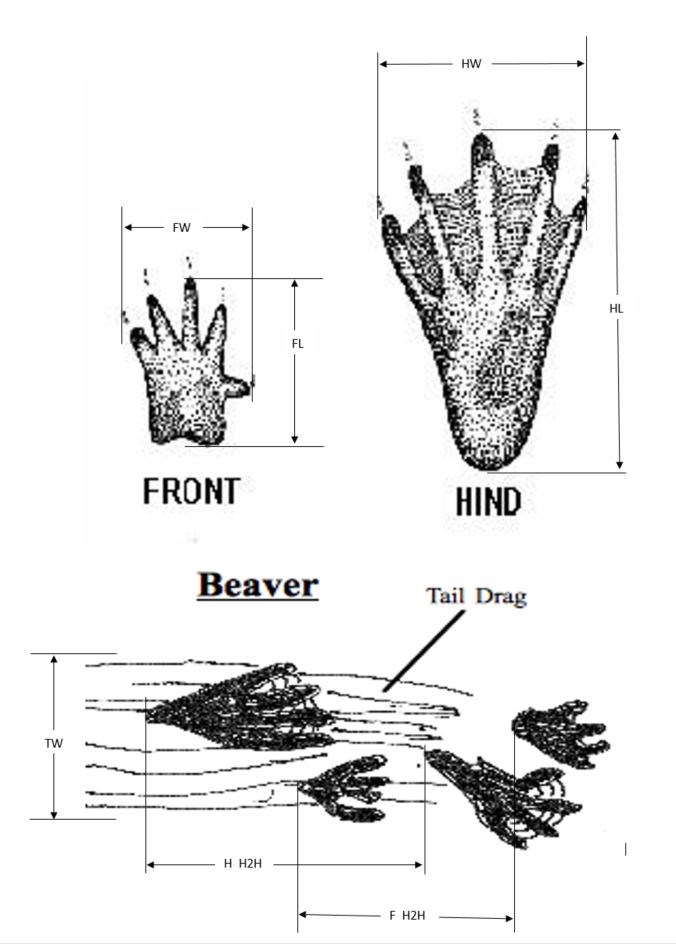
In order to establish the territories of the beaver studied for this page, it was necessary to use evidence other than strictly video. Beavers have distinct footprints that can be found along many muddy banks. By finding noting the presence of these tracks we can determine where the beavers travel to forage for food and supplies for their lodges.

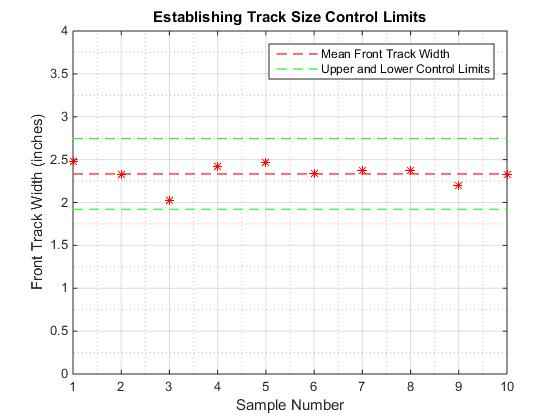
Going a step further, if we take several measurements on contiguous tracks and use these to establish statistical control limits, we are able to differentiate between beavers. If all measured tracks in a contiguous set are used to establish average print size and stride as well as step to step variance, we can assume with some level of statistical confidence that if another set of prints are measured and one or more of the parameters average falls outside of three standard deviations of the first set, it is likely a different beaver. The figure below shows some of the parameters I measure in the beavers tracks.
Documenting Predators
To truly understand the beavers of schoolhouse pond, you must first understand the challenges they face daily. One important challenge is dealing with predators such as fox, eagles, and coyotes. Luckily for the beavers of schoolhouse pond there has been no signs of coyotes all winter around the pond or their lodges. That being said, there is a very large red fox that has been photographed in many of the same areas as the beavers. At one point over the winter large tracks from the fox were found leading write up to the norther lodge where Sandra is thought to live.

Bald eagles also pose some threat to the beavers, specifically beaver kits. An adult beaver is likely much to large for a bald eagle to bother with, however, beaver kits are well within a bald eagles carrying capacity until they are nearly 3 months old.
Upper Marlboro is home to many bald eagles, two of these massive raptors live within a mile of schoolhouse pond.

The most dangerous predator for the beavers of Schoolhouse Pond is the coyote. There does not appear two be any coyote families living very close to the pond but coyotes do have very large home ranges (up to ten square miles) and this coyote was filmed only a mile or so south of the pond.

Assessing Our Impact
Of all the existential threats the beavers deal with on a daily basis, the threat of epic flooding, pollution, and habitat loss are likely the most daunting to the local beaver population. In the time since I began documenting these beavers it has become clear that the human impact on the beavers is enormous. In order to asses the impact I first set out to document the impact.

One very large impact all this street water drainage has on the beavers comes by way of biblical flooding. The western branch of Pax. River’s water level has been known to rise over 16′ is some of these floods. This is because all of the street water from most of the suburbs in PG county is drained into the river. These massive floods do real damage to the beavers habitats, destroying lodges and displacing the beavers. Displaced beavers are significantly more vulnerable to predators. To document this effect on the river ecosystem I have begun measuring the water level of the river as it correlates to rainfall. Overtime this will hopefully help by giving us data to back up or observations.

 Schoolhouse Pond Beaver Project